The SABRENT SuperSpeed 2 Slot USB 3.0 Flash Memory Card Reader review is for anyone seeking a straightforward way to access several common memory card formats from a USB port.
Its USB 3.0 interface, USB 2.0 compatibility, and plug-and-play setup suit simple file transfers, provided your device has a compatible USB connection.
SABRENT Card Reader Review Summary
The quick verdict
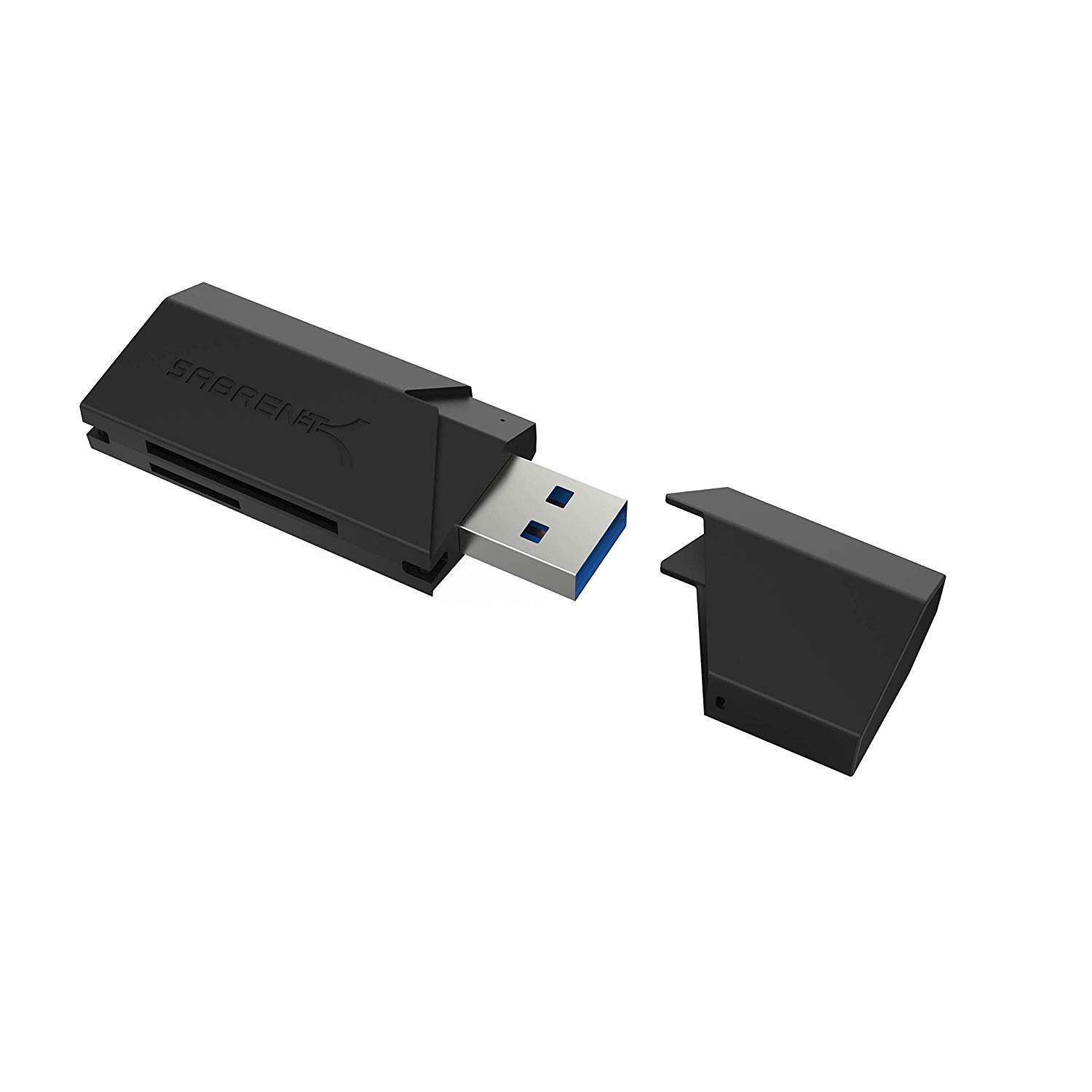
10,000+ ratings
Read Amazon ReviewsSABRENT SuperSpeed 2 Slot USB 3.0 Card Reader
A practical fit for buyers who need a simple USB-A card reader for SD and MicroSD media on compatible computers and Android systems.
- USB 3.0 interface for SuperSpeed connectivity.
- Backward compatible with USB 2.0 hosts.
- Powered through the USB port, with no separate power supply needed.
- Plug-and-play setup with no installation required.

Pros
- Supports a broad mix of SD and smaller-card formats, including MicroSD and T-Flash.
- USB-powered operation keeps setup simple and avoids carrying a separate power supply.
Consider before buying
- Android support is limited to certain systems, so check compatibility with your specific device before buying.
- The USB connection must match your host; confirm that your computer or device can accept the reader directly.
Read the full review summary
This compact reader is designed to cover SD, SDHC, SDXC, MMC, MicroSD, and T-Flash cards through two slots.
It draws power from the USB port, so you do not need to plan for a separate power supply, and the plug-and-play design avoids a driver installation step.
It is most compelling for someone who wants a basic reader for card access on Windows, Mac, Linux, or certain Android systems.
The key buying checks are whether your host has the right USB port, whether your card format is supported, and whether the reader’s two-slot layout meets your routine.
The buying factors
SABRENT Card Reader Scorecard
Editorial scores reflect listed features and buyer fit; they are not laboratory measurements or customer ratings.
Card format coverage
Support spans SD, SDHC, SDXC, MMC, MicroSD, and T-Flash, covering a useful mix of common formats.
Host compatibility
Windows, Mac, Linux, and certain Android systems are listed, though Android compatibility is qualified and device-specific.
Connection flexibility
USB 3.0 and USB 2.0 host support give it a familiar connection path, but buyers should confirm their device has a compatible port.
Setup simplicity
Plug-and-play operation is intended to work without installation.
Power convenience
The reader powers through USB, eliminating the need for a separate power supply.
Transfer potential
USB 3.0 provides a higher-bandwidth interface than USB 2.0, but actual transfer speed depends on the host, card, and files.
Key Features and Specifications of SABRENT Card Reader
- USB 3.0 interface for SuperSpeed connectivity.
- Backward compatible with USB 2.0 hosts.
- Powered through the USB port, with no separate power supply needed.
- Plug-and-play setup with no installation required.
- Supports SD, SDHC, SDXC, MMC, MicroSD, and T-Flash cards.
- Designed for Windows, Mac, Linux, and certain Android systems.
- Two-slot card-reader design.
Pros and Cons of SABRENT Card Reader
Pros
- Supports a broad mix of SD and smaller-card formats, including MicroSD and T-Flash.
- USB-powered operation keeps setup simple and avoids carrying a separate power supply.
- Plug-and-play use reduces setup steps for compatible systems.
- USB 3.0 connectivity is backward compatible with USB 2.0 hosts.
Consider before buying
- Android support is limited to certain systems, so check compatibility with your specific device before buying.
- The USB connection must match your host; confirm that your computer or device can accept the reader directly.
- The interface alone does not guarantee a particular transfer rate; card, host, and file characteristics also affect transfers.
Who Should Buy SABRENT Card Reader?
Good fit
Consider this reader if your routine involves moving files from SD, MicroSD, MMC, or T-Flash media to a compatible computer.
The supported formats make it useful as a general-purpose option when you work with more than one kind of card and want to avoid installing software.
Its USB-powered design is convenient for desk use or travel because there is no separate power supply to pack.
USB 3.0 offers a higher-bandwidth connection than USB 2.0, while backward compatibility lets it work with USB 2.0 hosts as well.
Before choosing it, identify the card formats you use and check the host connection and operating-system compatibility. That is especially relevant for Android, where support is limited to certain systems.
Who should skip it
Look elsewhere if you need a reader that connects directly to a device without a compatible USB port. Check your hardware first, and choose a different connection style if this reader will not fit your setup.
It may not suit a workflow that depends on confirmed compatibility with a particular Android device or a guaranteed transfer speed. The supported-system wording is qualified, and actual throughput depends on the rest of the transfer setup.
How the SABRENT Card Reader fits a card-transfer setup
Format support for mixed media
The listed formats include SD, SDHC, SDXC, MMC, MicroSD, and T-Flash.
That range can simplify a setup where cards come from different devices, but check the exact format on your card before purchase rather than assuming every card type is covered.
USB 3.0 and real transfer expectations
USB 3.0 provides the reader’s SuperSpeed interface, and USB 2.0 host compatibility gives it a route to older ports.
The interface describes the connection, not a guaranteed file-copy time: the host and memory card also shape the result, so consider this a connectivity feature rather than a speed promise.
Power and everyday setup
Power comes from the USB port, and plug-and-play operation is intended to avoid a separate installation process. Those choices keep the setup straightforward, though the reader still depends on a compatible host connection and operating system.
Operating-system fit
Windows, Mac, and Linux are included among the intended systems, while Android support applies only to certain systems.
If you plan to use a phone or tablet, verify that exact device supports the reader and the file-transfer workflow you need.
Alternatives to SABRENT Card Reader
One relevant alternative is included because it offers a useful connection-style difference for card transfers.
Computer Memory Card Readers alternative
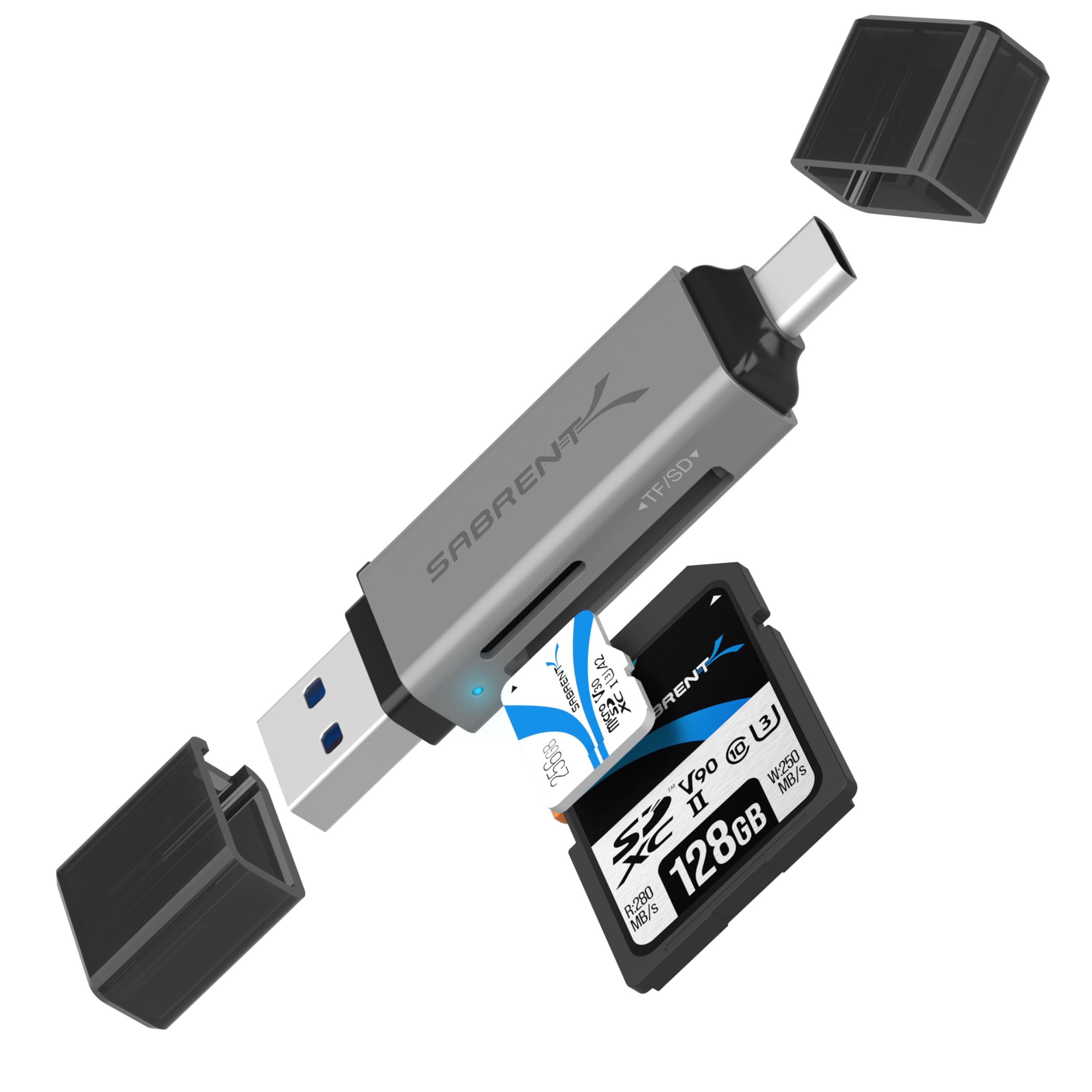
2,000+ ratings
Read Amazon ReviewsSABRENT USB-C & USB-A SD/MicroSD Card Reader
Choose the main reader if MMC or T-Flash support matters to your card mix.
The USB-C and USB-A model may fit better if you need to switch between those two port types and only require SD or MicroSD cards.
- This reader offers both USB-C and USB-A connections, supports SD and MicroSD card families, and has a USB 3.0 interface with backward compatibility for USB 2.0.
- Its listed details also include plug-and-play operation and an LED activity indicator.
- The SuperSpeed 2 Slot reader supports SD, SDHC, SDXC, MMC, MicroSD, and T-Flash and is described for USB 3.0 with USB 2.0 host compatibility.
Is SABRENT Card Reader Worth It?
The SABRENT SuperSpeed 2 Slot USB 3.0 Card Reader is worth considering for straightforward access to a broad selection of common memory card formats.
Its USB-powered, plug-and-play design and USB 2.0 host compatibility make it a practical option for a compatible computer setup.
Check the physical port, exact card format, and operating-system support before buying, particularly for Android devices. Treat USB 3.0 as a connection capability rather than a promise of a specific transfer speed.
Your review at a glance
10,000+ ratings
Read Amazon ReviewsSABRENT SuperSpeed 2 Slot USB 3.0 Card Reader
A practical fit for buyers who need a simple USB-A card reader for SD and MicroSD media on compatible computers and Android systems.
- USB 3.0 interface for SuperSpeed connectivity.
- Backward compatible with USB 2.0 hosts.
- Powered through the USB port, with no separate power supply needed.
- Plug-and-play setup with no installation required.